EXIMUS project concludes after three and a half years of research on music and Portuguese exile in France
The EXIMUS research project – “We Must Warn Everyone”: Music and Portuguese Exile in France during the Estado Novo Regime (1933–1974), coordinated by Manuel Deniz Silva, President of INET-md and Coordinator of its NOVA FCSH branch, concludes in October 2026, following three and a half years of scientific activity, historical research, international collaboration, and public engagement.
Funded by the Portuguese Foundation for Science and Technology (FCT), the project aimed to investigate the impact of exile on Portuguese musical creation during the Estado Novo dictatorship, exploring the relationships between music, political resistance, migration, and memory. Bringing together perspectives from musicology, ethnomusicology, history, and cultural studies, the research examined archival documentation, oral testimonies, and the individual trajectories of musicians exiled in France.
Among the figures studied were Fernando Lopes-Graça, Luís Cília, José Mário Branco, Sérgio Godinho, and Tino Flores, whose experiences shed light on different aspects of musical creation in contexts of exile and resistance to dictatorship.
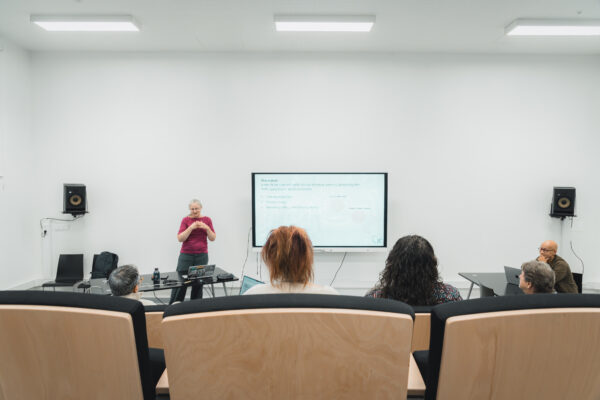
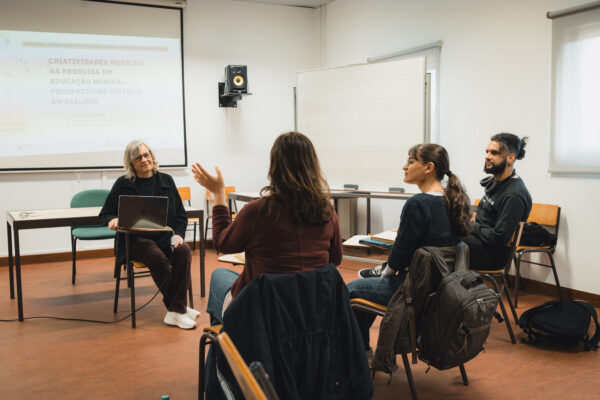
Throughout its implementation, EXIMUS organised a range of scientific and cultural activities, including the International Conference Music and Exile, held at NOVA FCSH from 21 to 23 May 2026, bringing together researchers from different countries and disciplinary backgrounds.
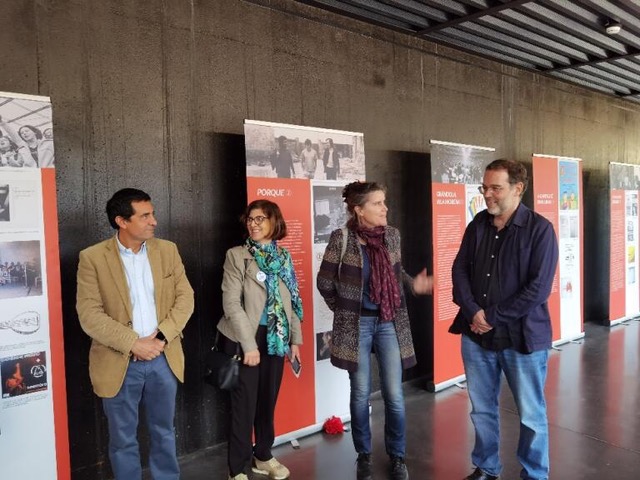
As part of its public engagement programme in France, October saw the presentation of the documentary exhibition Songs of Portuguese Exile on the Eve of the Carnation Revolution (1974) at Le Rocher de Palmer, a cultural venue in Cenon, near Bordeaux. Organised in partnership with the O Sol de Portugal association, the event was attended by Miguel Brito e Abreu, Consul of Portugal in Bordeaux, strengthening the connection between academic research and Portuguese communities in France.
On 15 October, a final meeting was held in Paris with the Mémoire vive – Memória viva association, a project partner, providing an opportunity to review the work undertaken and discuss possible long-term developments. Among the issues addressed was the possibility of re-establishing contact with relevant stakeholders who could help resolve the rights issues surrounding the film O Salto, which currently prevent its public screening.
Although EXIMUS formally concludes at the end of October 2026, several research initiatives related to Fernando Lopes-Graça will continue until the summer of 2027.
The project’s conclusion therefore marks not only the completion of an extensive research programme but also the consolidation of scientific and institutional partnerships and the emergence of new opportunities for research into the memory of Portuguese exile, resistance to dictatorship, and the role of music in the political and cultural history of the twentieth century.
Further information: Official EXIMUS project website
EXIMUS project – “We Must Warn Everyone”: Music and Portuguese Exile in France during the Estado Novo Regime (1933–1974) (2022.05129.PTDC), funded by the Portuguese Foundation for Science and Technology (FCT).
Related