


Faculdade de Ciências Sociais e Humanas | Universidade Nova de Lisboa
Av. de Berna, n.º 26 C
1069-061 Lisboa
Portugal
Email: gcnicoletta@fcsh.unl.pt
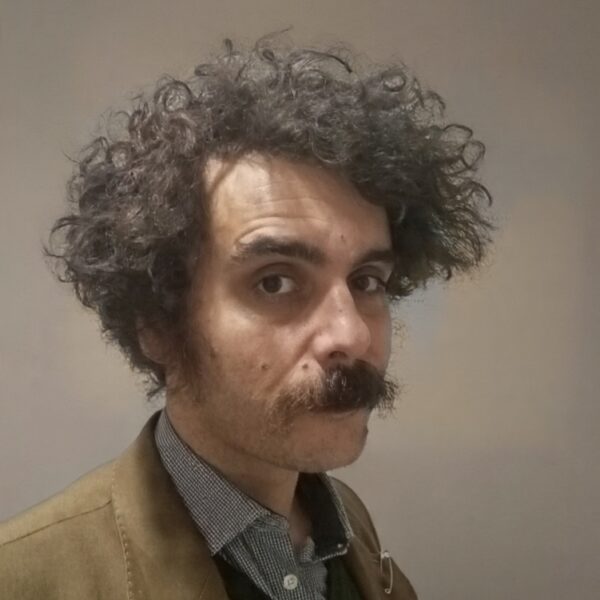
Gerardo Costabile Nicoletta
Gerardo Costabile Nicoletta holds a Bachelor’s degree in Sociology (2010) and a PhD in Sociology and Social Research (2016) from the University of Naples Federico II, Italy, and a Master’s degree in Global Political Economy (2012) from the University of Sussex, United Kingdom.
He conducted postdoctoral research at Charles University in Prague, Czech Republic, between 2021 and 2022, where he subsequently continued his research and teaching activities until 2025 in the fields of discourse studies, environmental communication, postcolonial theory, and global political economy. Between 2024 and 2026, he was a postdoctoral researcher at the University of Calabria, Italy, where he further developed his research on the social and political conflicts surrounding energy transitions, particularly in rural territories of Southern Italy.
His research lies at the intersection of political sociology, discourse-theoretical analysis, political ecology, and environmental humanities, with a particular interest in the relationships between expert knowledge, power, territory, and socio-ecological transformations. He has published in international academic journals, including Journal of Language and Politics, Global Political Economy, Journal of Environmental Media, and Journal of Multicultural Discourses. He is also co-editor of the volume Economisti e Società. Nuove sociologie dell’expertise economica (2023).
Alongside his academic activities, he is a traditional woodwind and string instrument maker and performer, bringing this practical expertise into his research on artisanal knowledge, sonic cultures, and relationships between communities and the environment.
Since October 2026, he has been a postdoctoral researcher at INET-md, holding a Marie Skłodowska-Curie Postdoctoral Fellowship funded by the European Union through Horizon Europe. He is conducting the research project SonErg — Sonic Energies, under the scientific supervision of Filippo Bonini Baraldi. His research bridges the Ethnomusicology and Popular Music Studies and Music Acoustics and Sound Studies research groups, within the thematic line Power, Politics and Activism.
Project Title
SonErg — Sonic Energies. The Impact of Energy Transitions on Southern Italian Traditional Woodwind Instruments
Advisor
Abstract
The SonErg — Sonic Energies project investigates the impact of past and present energy transitions on musical practices and traditional woodwind instrument-making in Southern Italy. Situated at the intersection of Ethnomusicology, Sound Studies, Social Theory, and Energy Humanities, it seeks to understand how transformations in energy systems influence artisanal knowledge, soundscapes, performance practices, and the relationships between rural communities and their environments.
Building on the premise that energy transitions are not merely technological and economic processes but fundamentally cultural, social, and epistemological transformations, the research examines traditional musical instruments as material expressions of different ways of understanding ‘energy’ beyond its hegemonic definition. Instruments such as the zampogna, ciaramella, and cocchia, historically associated with the agro-pastoral cultures of Southern Italy, provide a means of exploring how local ecological knowledge, the use of organic materials, and traditional crafting techniques have gradually been transformed by the introduction of synthetic materials, mechanised tools, and new conditions of musical production and performance.
The research explores how these transformations relate to three major energy regimes — pre-industrial, fossil-fuel-based, and renewable — and how traditional instrument makers and musicians respond to changes in infrastructure, natural resources, and landscapes. Particular attention is paid to the tensions between preserving ecological and artisanal knowledge and adopting new materials and technologies, as well as to the forms of resistance, negotiation, and adaptation developed by local communities.
The project employs a multi-method approach combining historical and archival research, discourse-theoretical analysis, ethnography, participant observation, interviews, and acoustic analysis. Fieldwork will be conducted across several Italian regions, including Abruzzo, Lazio, Campania, Basilicata, Calabria, and Sicily, involving instrument makers, musicians, and local communities. Documentation of crafting techniques, materials, and performance contexts will be complemented by sound and audiovisual recordings, enabling comparisons between the acoustic characteristics of instruments produced using traditional and contemporary methods.
The project thus aims to contribute to a broader understanding of the cultural and sensory dimensions of energy transitions, recognising local knowledge and musical practices as important forms of producing and transmitting knowledge about relationships between humans, technology, and the environment.
Research findings will be disseminated through international scientific publications, academic meetings, an audiovisual archive, a travelling art exhibition, and an interactive website designed to provide access to and promote the collected research materials. The project also seeks to foster dialogue between researchers, artists, artisans, and local communities, contributing to the development of more socially and culturally inclusive perspectives on sustainability and energy transitions.
Keywords: Ethnomusicology, Energy Humanities, Energy Transitions, Sound Studies, Traditional Woodwind Instruments, Ethnography, Cultural Heritage.