


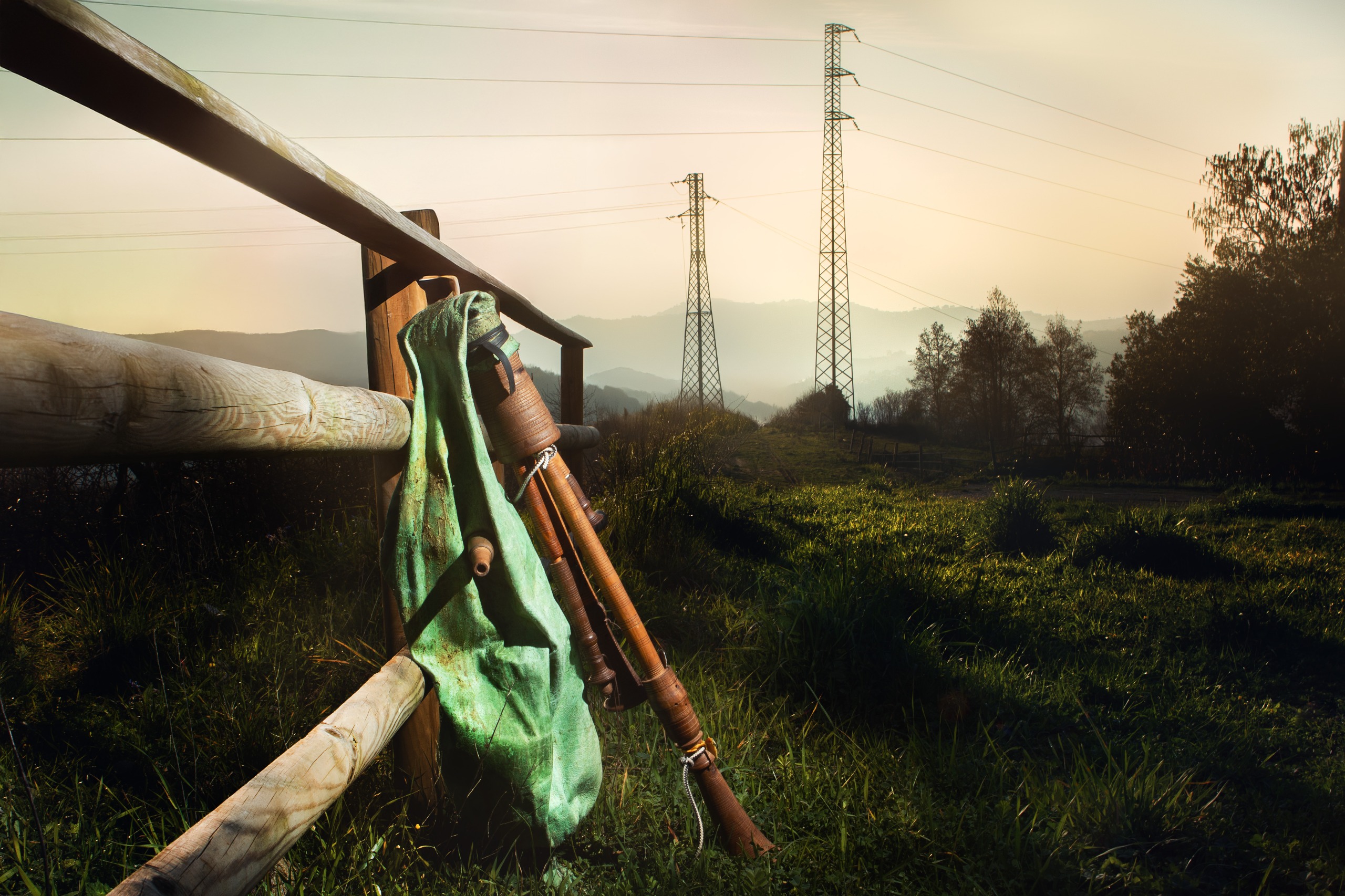
The SonErg — Sonic Energies project investigates the impact of past and present energy transitions on musical practices and traditional woodwind instrument-making in Southern Italy. Situated at the intersection of Ethnomusicology, Sound Studies, Social Theory, and Energy Humanities, it seeks to understand how transformations in energy systems influence artisanal knowledge, soundscapes, performance practices, and the relationships between rural communities and their environments.
Building on the premise that energy transitions are not merely technological and economic processes but fundamentally cultural, social, and epistemological transformations, the research examines traditional musical instruments as material expressions of different ways of understanding ‘energy’ beyond its hegemonic definition. Instruments such as the zampogna, ciaramella, and cocchia, historically associated with the agro-pastoral cultures of Southern Italy, provide a means of exploring how local ecological knowledge, the use of organic materials, and traditional crafting techniques have gradually been transformed by the introduction of synthetic materials, mechanised tools, and new conditions of musical production and performance.
The research explores how these transformations relate to three major energy regimes — pre-industrial, fossil-fuel-based, and renewable — and how traditional instrument makers and musicians respond to changes in infrastructure, natural resources, and landscapes. Particular attention is paid to the tensions between preserving ecological and artisanal knowledge and adopting new materials and technologies, as well as to the forms of resistance, negotiation, and adaptation developed by local communities.
The project employs a multi-method approach combining historical and archival research, critical discourse analysis, ethnography, participant observation, interviews, and acoustic analysis. Fieldwork will be conducted across several Italian regions, including Abruzzo, Lazio, Campania, Basilicata, Calabria, and Sicily, involving instrument makers, musicians, and local communities. Documentation of crafting techniques, materials, and performance contexts will be complemented by sound and audiovisual recordings, enabling comparisons between the acoustic characteristics of instruments produced using traditional and contemporary methods.
The project thus aims to contribute to a broader understanding of the cultural and sensory dimensions of energy transitions, recognising local knowledge and musical practices as important forms of producing and transmitting knowledge about relationships between humans, technology, and the environment.
Research findings will be disseminated through international scientific publications, academic meetings, an audiovisual archive, a travelling art exhibition, and an interactive website designed to provide access to and promote the collected research materials. The project also seeks to foster dialogue between researchers, artists, artisans, and local communities, contributing to the development of more socially and culturally inclusive perspectives on sustainability and energy transitions.
Keywords: Ethnomusicology, Energy Humanities, Energy Transitions, Sound Studies, Traditional Woodwind Instruments, Ethnography, Cultural Heritage.