Loading
Category
PhD Candidate
Ciência ID code
C413-0E3C-C762
Details

Departamento de Comunicação e Arte | Universidade de Aveiro

Campus Universitário de Santiago
3810-193 Aveiro
Portugal

Tel: (+351) 234 370 389 (ext. 23700)

Branch
Research Group

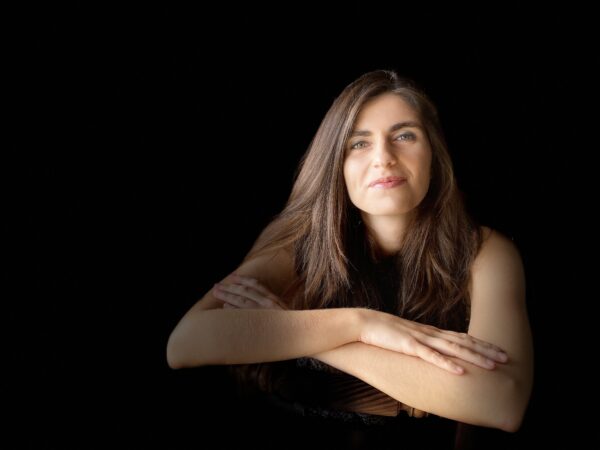
Ágata Ricca

Biography

Ágata Ricca was born in Porto and completed the piano course at the Porto Conservatory of Music. She has a Bachelor’s and Master’s degrees in Choral Conducting from the Lisbon Superior School of Music, where she studied with the conductor Paulo Lourenço. She also studied in Riga, Latvia, with the conductor Andris Veismanis. She attended conducting masterclasses with Stephen Cocker, Eugene Rogers, Brett Scott, Paul McCreesh, Greg Beardsell, Werner Pfaff, Elisenda Carrasco and David Azurza. She works as a conductor since 2011. Ágata is a doctoral student in choral conducting at the University of Aveiro, under the guidance of Dr. Paulo Maria Rodrigues. Having already worked in various educational institutions and educational/social projects, her field of research, interest and action is choral practice as a mean of social action, which she has been developing in Portugal and abroad. She is also a member of the board of Coros Portugal – Portuguese Association for Choral Music, which main objective is to create, support and promote projects that develop choral music in Portugal and take portuguese choral music across borders.

Doctoral Project

Title

Seeing the world from a “sense of possibility”: perspectives on an experience of choral practice in the daily life of a refugee camp.

Advisor

Paulo Maria Rodrigues

Abstract

A prática coral tem sido uma importante ferramenta de intervenção social em muitos contextos comunitários. Foi já estudado em investigações anteriores que cantar pode aumentar a auto-estima, a sensação de bem-estar e ajudar na criação de laços sociais e afectivos. Em situações de marginalização, cantar em conjunto pode ajudar na integração e no sentimento de pertença. Um coro pode ser um espaço seguro, de partilha, de imaginação de possibilidades, um lugar onde se tem uma voz. Cantar em coro pode criar um canal de expressão e comunicação e de experiência partilhada de momentos de prazer. Os refugiados são um grupo especialmente vulnerável, que frequentemente sofre discriminação e encontra barreiras ao acesso aos direitos mais básicos. O mundo está a viver a maior crise de refugiados desde a II Guerra Mundial e os campos de refugiados são lugares onde se formam comunidade acidentais. Nessas comunidades, a arte teChoral practice has been an important social intervention tool in many community contexts and has shown very positive results. Previous research shows that singing can improve self-esteem, and well-being and help in the creation of new and meaningful bonds. In situations of marginalization, singing with other people can help in the integration and sense of belonging. A choir can be a safe place, a place to share, to build imaginations of possible selves, and to give a voice. Singing in a choir can be a channel for expression and communication and shared enjoyable moments. Refugees are an especially vulnerable group, who suffer discrimination and face constant barriers to accessing basic human rights. The world is facing the worst refugee crisis since world war two and refugee camps are places where accidental communities are created. These communities can use art to share and maintain their cultures and to get closer to new ones. Based on the benefits of choral practice studied in other contexts of conflict and social inequality, this project intends to create an experience of artistic communication through choral practice in a refugee camp and to understand how the choir (grounded in trust, care and respect) can be a way to create a sense of possibility in the participants. m um papel preponderante ao permitir manter, partilhar e aceder a novas culturas. Baseado nos benefícios já estudados que a música coral mostrou em outras situações de conflito e desigualdade social, este projecto pretende criar uma experiência de comunicação artística através da prática coral, num campo de refugiados, e perceber se esse coro (em que a confiança, o cuidado e o respeito são pilares fundamentais) pode ser uma forma de criar um senso de possibilidade nos seus participantes.