Luísa Roubaud, researcher at INET-md, authored the chapter titled ‘When Dance Becomes a Weapon,’ published in the edited volume Por uma Felicidade Assim (Ed. Nome Próprio, 2025), under the editorial coordination of Madalena Alfaia.
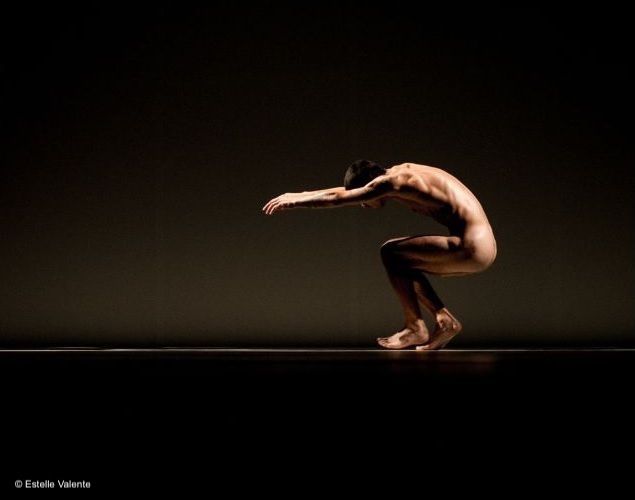
In “When Dance Becomes a Weapon”, Luísa Roubaud offers a critical reading of the artistic trajectory of choreographer Victor Hugo Pontes (b. Guimarães, 1978), from his early experiences in a folk-dance group and in theatre to the consolidation of a body of work shaped by the interplay between dance, visual arts, text and performance. The essay examines the singularity of an unlikely path: that of a creator who arrived to dance through peripheral and heterodox routes, turning these detours into a language of his own. Bringing together biography and an analysis of the repertoire, the text shows how Pontes’s work gradually acquired political depth, interrogating body, norm, difference, colonial memory, marginality and belonging. By reading his dance as an embodied cultural manifestation, the author frames the scenicspace as one of thought and resistance: a poetic and politically situated weapon, exposed to the scrutiny of its time.