


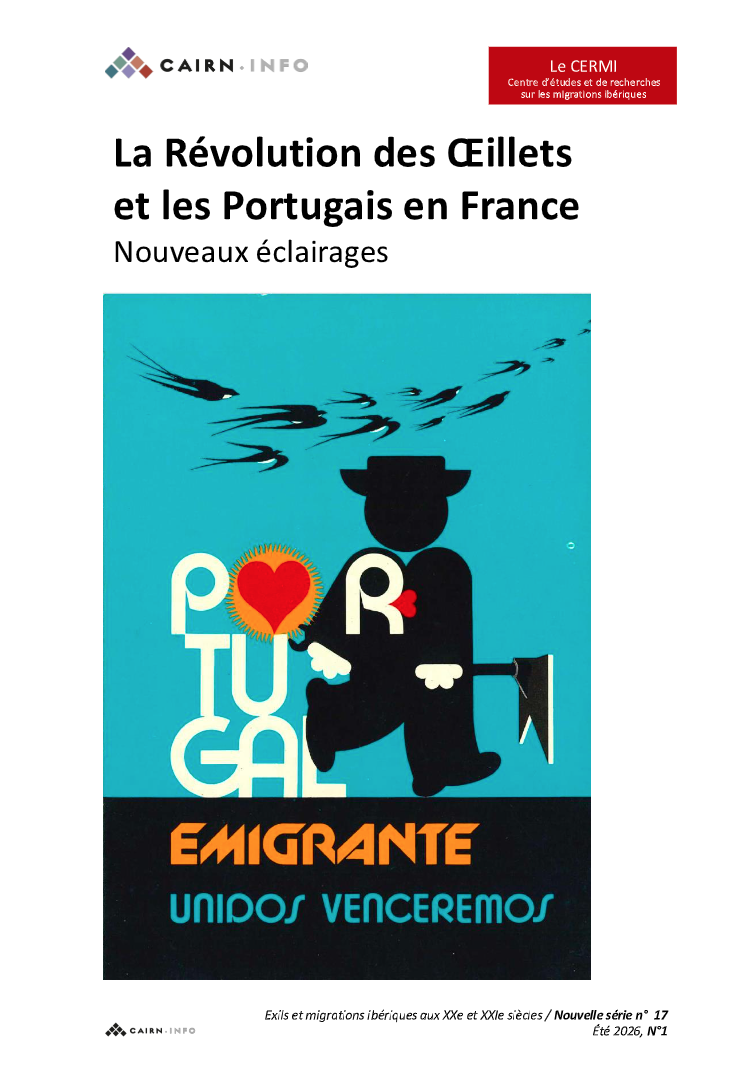
INET-md researchers, Hugo Castro and Ricardo Andrade, sign the article “José Mário Branco et l’utilisation de la « musique traditionnelle » : le renouveau de la « musique populaire portugaise » au début des années 1970“, translated by Agnès Pellerin, and published in the special issues of the journal Exils et migrations ibériques aux XXe et XXIe siècles, titled “La Révolution des Œillets et les Portugais en France”, coordinated and edited by Marie-Christine Volovitch-Tavares, Cristina Clímaco and Emma Rubio-Milet.
The article examines the work of José Mário Branco (1942–2019) during his exile in France. Inspired by José Afonso and by the Portuguese protest song movement opposing the dictatorship, José Mário Branco emerged as a pioneering record producer and musical arranger. Influenced by the traditional music recordings collected and published by Michel Giacometti and Fernando Lopes-Graça, he regarded them as a counter-hegemonic alternative to the cultural models promoted by the Estado Novo regime. His work became distinctive for combining innovative studio practices with elements of Portuguese traditional music, an approach that intensified after the Carnation Revolution through his involvement with GAC – Vozes na Luta.
This article stems from research carried out by the authors within the framework of the José Mário Branco Centre for Studies and Documentation – Music and Freedom and the FCT-funded EXIMUS project – “‘We must warn everyone’: Music and Portuguese exile in France during the Estado Novo regime (1933-1974)” (2022.05129.PTDC, DOI: 10.54499/2022.05129.PTDC).
Abstract:
Keywords: Exile / emigration, protest song, record production.