


Visiting-researcher (outgoing)
Guillermo de Llera Blanes
Supervision at the host instituiton
Professor Marcelo M. Wanderley (McGill University, CIRMMT/IDMIL).
Funding
Funded by the Ibermúsicas Programme through its “Support for Artistic and Technical Specialisation and Advanced Training” scheme, 2025 call.; travel and acommodation partially financed by national funds through FCT — Fundação para a Ciência e a Tecnologia, I.P., with the project INET-md – Institute of Ethnomusicology – Centre for Studies in Music and Dance, reference UID/00472/2025, DOI: 10.54499/UID/00472/2025
Participating institutions
- Institute of Ethnomusicology – Centre for Studies in Music and Dance
- School of Social Sciences and Humanities, NOVA University Lisbon
- McGill University
- Centre for Interdisciplinary Research in Music Media and Technology (CIRMMT)
- Input Devices and Music Interaction Laboratory (IDMIL)
Implementation period
September 3rd to December 23rd, 2026.
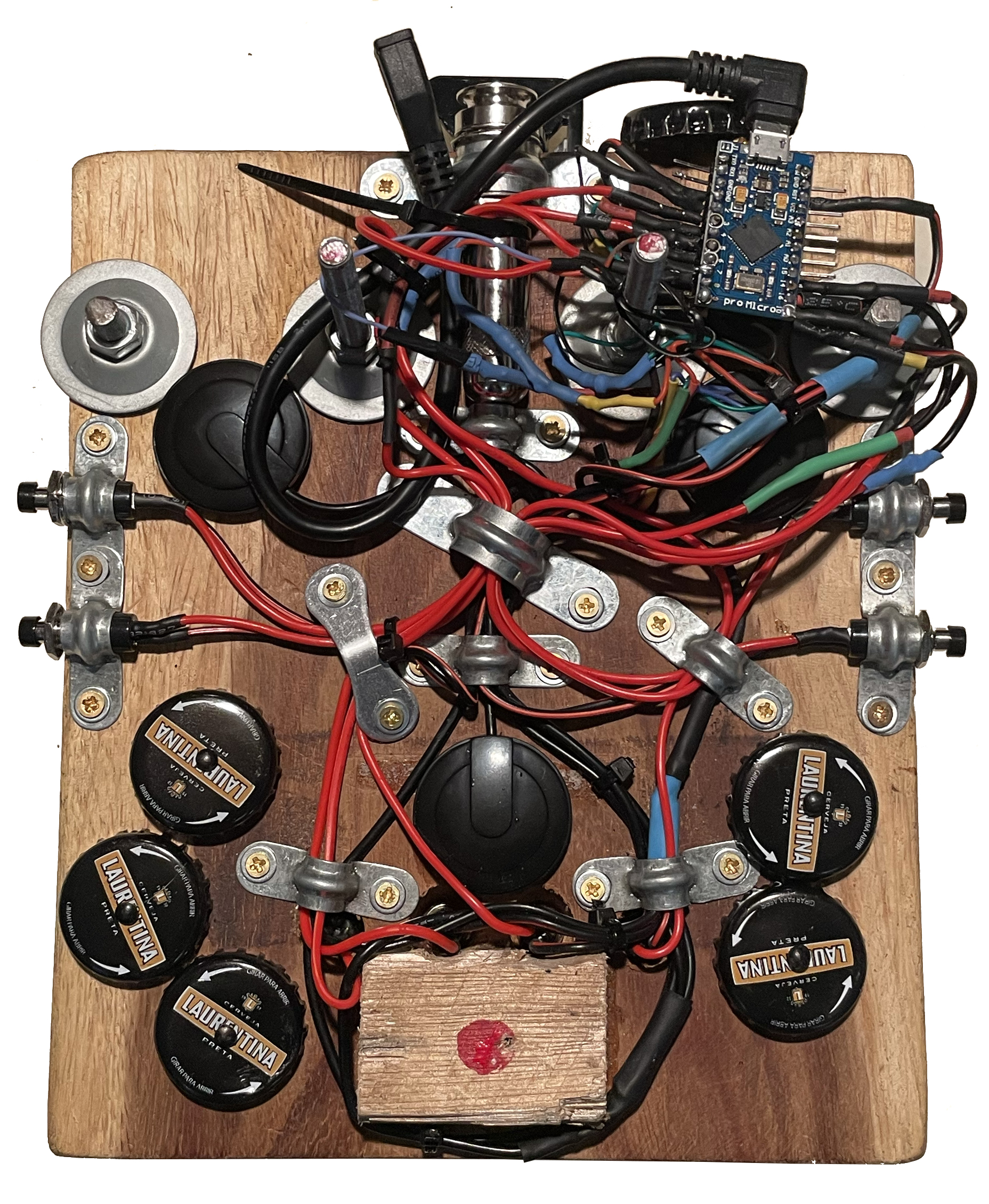
Abstract The MidiMbira began to take shape during six years of fieldwork and music-making in Mozambique. The instrument combines elements of the mbira with sensors, MIDI controls and digital processing tools, while retaining a physical relationship with the playing techniques and knowledge associated with the acoustic instrument. The prototype also became one of the principal research objects of Guillermo de Llera Blanes’ doctoral work, in which he developed Playability Theory through the construction and use of successive versions of the MidiMbira.
From September to December 2026, Guilllermo will take the prototype to the Centre for Interdisciplinary Research in Music Media and Technology (CIRMMT) and the Input Devices and Music Interaction Laboratory (IDMIL) at McGill University in Montreal. Working under the supervision of Professor Marcelo M. Wanderley, Guillermo will address problems that emerged during the instrument’s construction and use, including sensor response, tactile and visual feedback, wireless communication and the relationship between technical design and concrete ways of playing.
The work will include practical sessions with musicians and researchers, allowing the instrument’s responsiveness and the cultural relevance of its new functions to be evaluated. The residency will also provide the setting for the initial development of complementary sampling and live-looping software. During the final phase, schematics, annotated code and assembly instructions will be brought together as open-access documentation. The results will be presented at CIRMMT through a technical demonstration and performance.
Keywords
MidiMbira; digital musical instruments (DMI); mbira; research-creation; musical interaction.
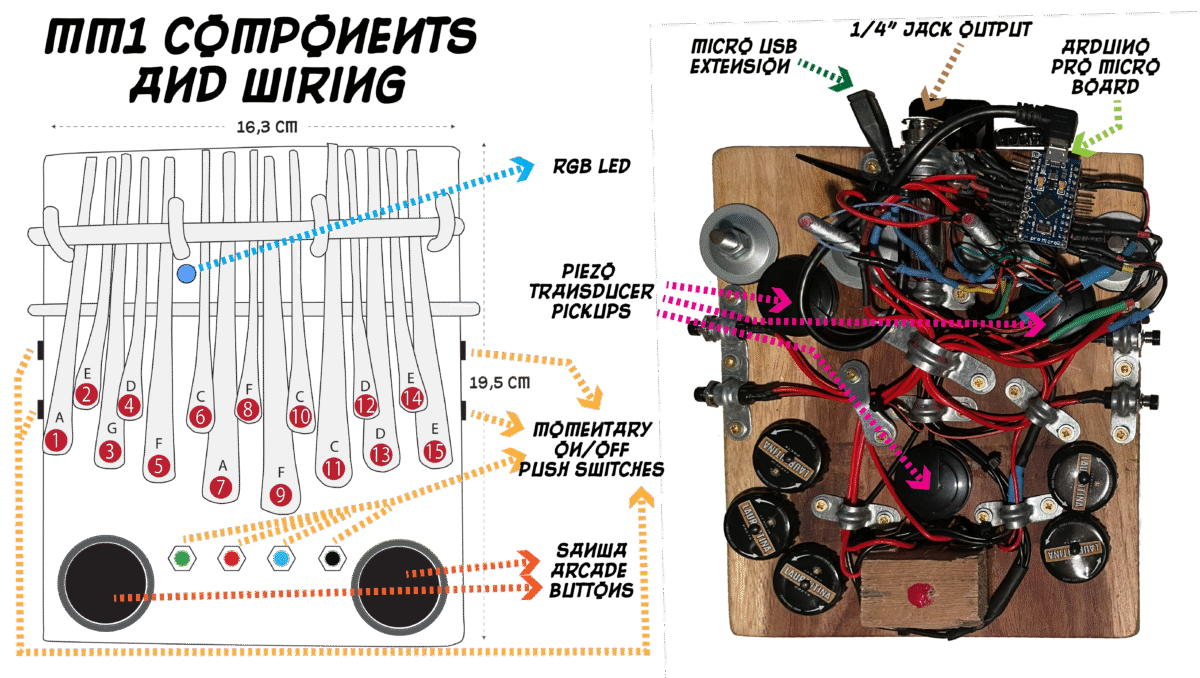
Photographs by Guillermo de Llera Blanes®