


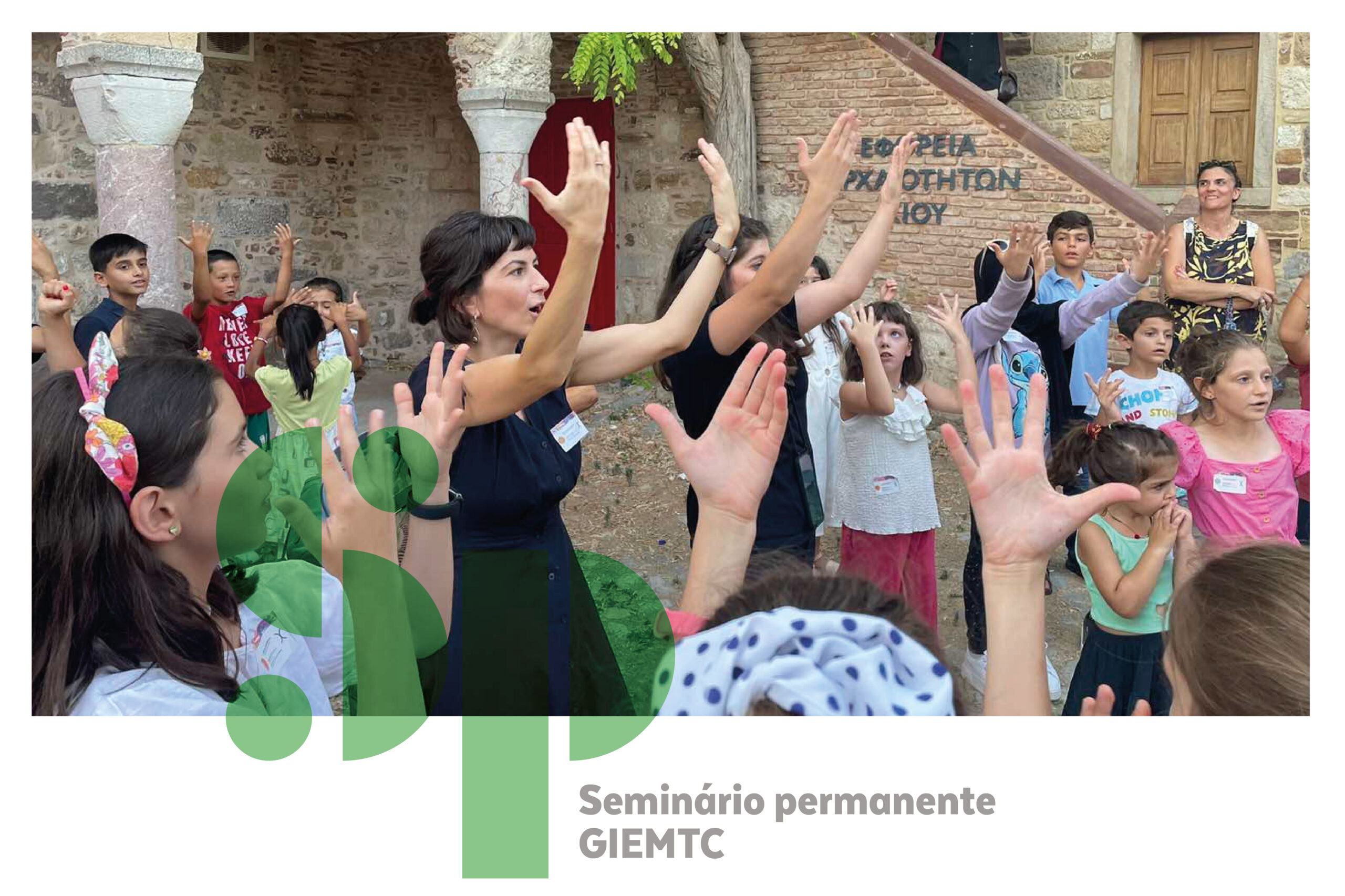
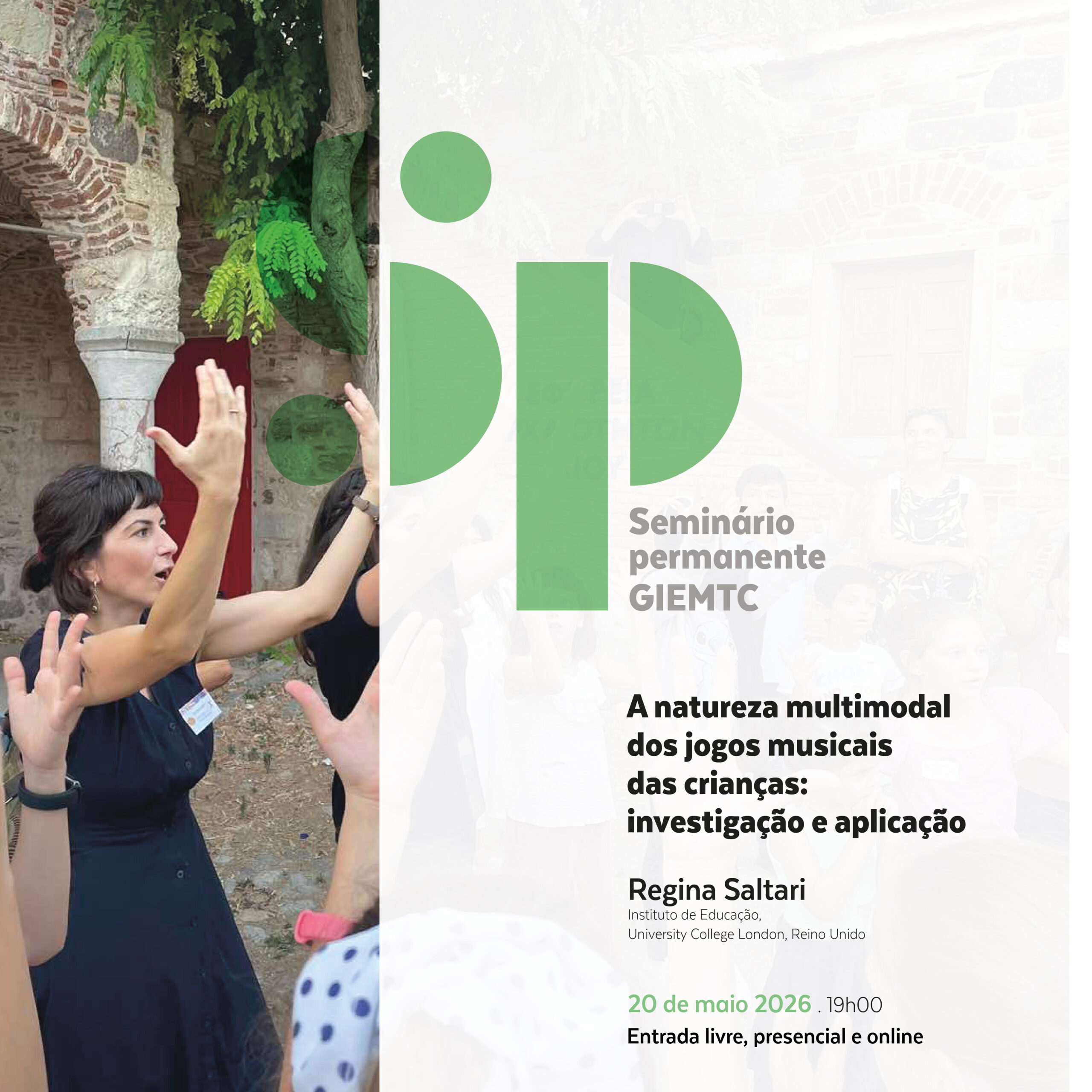
Permanent Seminar of the Research Group on Education, Music and Theater in the Community
20 May 2026 | 19.00-20.30 | Escola Superior de Educação, Politécnico do Porto | Room 110 & Seminário do Grupo de Investigação do INET-md Educação, Música e Teatro na Comunidade | Reunião-Participar | Microsoft Teams
Free entrance, both online and in presence
The multimodal nature of children’s musical games: research and applications
Regina Saltari | Institute of Education, University College London, United Kingdon
The seminar focuses on research theory and applications of musical games that children play at school playgrounds of their own accord and often away from adults’ gaze. Musical games, encompassing singing, clapping, chants, and rhymes, are social interactions that require synchronization, collaboration, and communication among players. These musical practices are multimodal, as participants use sound, movement, body, gaze, gestures, and speech to communicate and create meaning within specific performance contexts. The seminar will examine methodological approaches for studying children’s informal musical play, particularly in relation to what these may reveal about children’s sense of agency, musical and social development, identity, and embodied expression, and will present applied research and practical uses in formal and non-formal educational contexts. Possible reasons why this type of children’s informal musicking often remains invisible to educators, and the implications of such dissonance between classroom and school playground, will also be discussed.
Regina Saltari is a Lecturer in Music Education at University College London Institute of Education. Her core research interest lies in children’s musical games as socio-cultural practices, which she has explored in various settings in Greece and the UK. She has created a multimodal analysis framework to investigate the multiple modes that child performers use to communicate during their play. She is a strong advocate for the validation of children’s informal musicking in educational settings.