


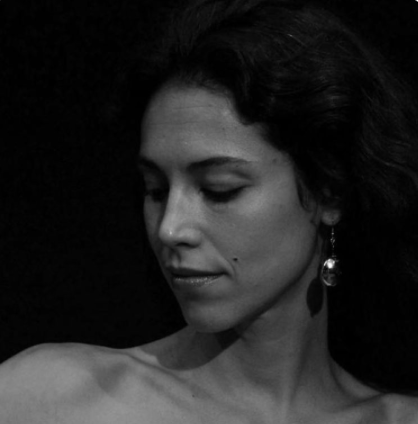
On 18 November 2026 (Wednesday), at 2:00 p.m., in the Sala de reuniões dos Orgãos de Gestão of the Faculty of Human Kinetics, University of Lisbon, Ana Maria de Sousa Leitão will defend her doctoral dissertation entitled: Generative Dance as a Self-Organizing Dynamic System: A Study on Choreographic Emergence and the Phenomenon of Togetherness
The jury, chaired by Professor Celeste Simões, Associate Professor and Vice-President of the Scientific Council of the Faculty of Human Kinetics, University of Lisbon, is composed as follows:
- Professor Susan Sgorbati – Full Professor, Bennington College, Vermont, USA;
- Professor Dolors Cañabate Ortiz – Associate Professor, Faculty of Education and Psychology, University of Girona;
- Professor Carla Montez Fernandes – Principal Researcher, School of Social Sciences and Humanities, NOVA University Lisbon;
- Professor Daniel Filipe de Jesus Carrilho – Invited Assistant Professor, Faculty of Human Kinetics, University of Lisbon;
- Professor Ângelo Miguel Cid Neto – Invited Assistant Professor, Faculty of Human Kinetics, University of Lisbon;
- Professor Maria João Fernandes do Nascimento Alves – Assistant Professor, Faculty of Human Kinetics, University of Lisbon.
Generative Dance as a Self-Organizing Dynamic System: A Study on Choreographic Emergence and the Phenomenon of Togetherness
This dissertation investigates how dance can be conceived as a self-organizing dynamic system capable of generating emergent choreographic structures from simple relational rules inspired by agent-based models, and how this approach influences dancers’ lived experience of real-time co-creation and togetherness. The thesis is presented as an article-based dissertation comprising five peer-reviewed articles organized across four thematic chapters that address the conceptual, formal, methodological, and empirical dimensions of the research. Conceptually, the thesis frames generative dance as a practice that is simultaneously relational, dynamic, and experiential, in which global coherence arises from local interaction and co-regulation rather than external control. An integrated conceptual and epistemological architecture brings together computational modeling as a heuristic lens for making organizing principles visible, the translation of modeled dynamics into Mathematical Choreographic Objects (MCOs) as relational scores, their activation through the Generative Dance with Agent-Based Models (GDAM) program, and the qualitative study of togetherness as an emergent, situated phenomenon. Methodologically, the research adopts a transformative mixed-methods design (Creswell, 2014), combining an implicit quantitative component (computational modeling) with an explicit qualitative focus (experience and interpretation), interconnected through an iterative logic of Practice-led Research and Research-led Practice (Smith & Dean, 2009). The study unfolds across three interdependent phases: (1) the formalization and systematic analysis of theoretical agent-based models; (2) artistic practice-as-research through the development and implementation of MCOs and GDAM; and (3) qualitative inquiry based on in-depth interviews focused on dancers’ lived experience of dancing together and the phenomenon of togetherness.
Across the thesis, simple relational rules—operationalized through MCOs—emerge as capable of sustaining collective self-organization and generating distinct choreographic configurations, supporting distributed authorship and shifting choreography from directing outcomes toward catalyzing correlations among performers. At the same time, the articulation between modeling and practice proves fertile yet inevitably partial: embodied practice brings attention, affect, and intentionality into the system, positioning modeling as a heuristic language rather than a reduction
of dance. Through GDAM practice, emergence is approached as an embodied experience, often described as patterns “forming by themselves,” in which choreographic work unfolds as a real-time field of possibilities organized around attractor-like tendencies. MCOs, as relational rules, operate as enabling constraints that redistribute compositional agency while keeping the system open to unpredictability. Qualitative accounts suggest that GDAM practice can support situated experiences of togetherness through intercorporeal co-regulation and forms of WE-agency—manifested as openness to shared intentional content, mutual awareness, reciprocal influence, and a felt sense of unity and belonging—yet always context-dependent and continuously negotiated through mutual listening, breaks, and repairs. Overall, this dissertation can be understood as contributing, in theoretical, methodological, artistic, and pedagogical terms, to Human Movement Sciences and to contemporary understandings of choreography as an emergent relational process.