


Faculdade de Ciências Sociais e Humanas | Universidade Nova de Lisboa
Av. de Berna, n.º 26 C
1069-061 Lisboa
Portugal
Email: torpeslima@gmail.com
Tel: (+351) 21 790 83 00 (ext. 1583)
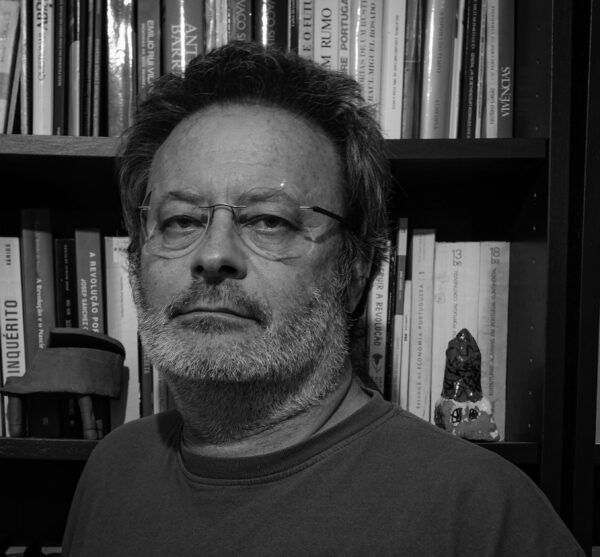
Paulo Lima
Biography
Paulo Lima (n. 1966, Sines) has a degree in Anthropology (ISCTE-IUL). He was part of several teams responsible for preparing applications for enrolment in UNESCO of many manifestations of intangible cultural heritage, namely, Fado, Cante Alentejo and Fabrico de Chocalhos. He represented the Portuguese Government, under Cooperation with the Government of Cabo Verde, in Morna’s Candidacy for the Representative List of UNESCO’s Cultural and intangible Heritage.
Between the years of 1994 and 2004, he worked on improvised chants, the tenth spinelian and fado in Portugal, in the Iberian Peninsula, the Mediterranean and South and Central America. Between 1993 and 2010, he collaborated with the Portuguese Popular Traditions Centre Prof. Manuel Viegas Guerreiro, from Faculdade de Letras of Lisbon, working directly with Prof. Maria Aliete Galhoz (1929.2020) on traditional literature, genetic criticism and prayers.
He was author and scientific coordinator (2007-’10) of the project Identidades, programa para a salvaguarda do património cultural imaterial do Alentejo, implemented by the Regional Directorate of Culture of Alentejo. He was director of Casa do Cante, Serpa (2012-2017). In 2014 and 2015, he coordinated the Valorisation Project of the PCI of Alentejo of Tourism Alentejo and Ribatejo, Regional Tourism Entity of Alentejo and Ribatejo. He was responsible for the musealisation of the Paço dos Henriques/PAGUS project (2017-2018).
He was curator of POLÍTICA & IMAGEM 2020 – International Meetings of Politics and Image of Lagoa, which brought together a collective of photographers consisting of Augusto Brázio, João Pina, Valter Vinagre, Lara Jacinto and Paulo Catrica. He is responsible for the concept, implementation and coordination of the project of Casa da Cidadania, Municipality of Lagoa (in progress). He has been investigating, since 2017, the history of Agrarian Reform in military archives, as well as the role of peasant women in social movements in Mediterranean Portugal in the 20th century. Its areas of interest are: intangible cultural heritage, landscape, safeguarding and management of heritage information; popular literature, pastoralism and metallurgy, peasant resistance and studies on women in peasant revolts.
The anthropologist has several published works, CD’s articles and monographs, of which stand out: Carta do património de Portel, Vol. I; Fado operário no Alentejo (secs. XIX-XX) (2004); Minhas senhoras e meus senhores… vida, fome e morte nos campos de Beja durante o Salazarismo; Filmografia completa de Michel Giacometti, newspaper edition Público-Tradisom; Cantes (in co-authorship with Salwa Castelo-Branco), publication of the newspaper Público— A Bela e o Monstro; Severa 1820, edição comemorativa do duplo centenário do nascimento de Maria Severa Onofriana e dos dez anos de inscrição do Fado na Lista representativa do património cultural Imaterial da UNESCO (coordenação), Tradisom edition, with contributions by Rui Vieira Nery, Salwa Castelo-Branco, Pedro Félix, Manuel Deniz Silva, Augusto Brázio, among others.
Paulo Lima received from the Government of Cape Verde the Medal of Cultural Merit of 1stº Degree, for his participation in Morna’s candidacy for Intangible Cultural Heritage of Humanity (2019). He was awarded the following awards: APOM 2022 Award. for the best museography project (with the João Borges workshop), with the Cante Alentejano Interpretative Centre, and the IMATERIAL-2023 Festival Award, awarded by the INATEL Foundation and Évora City Council.