


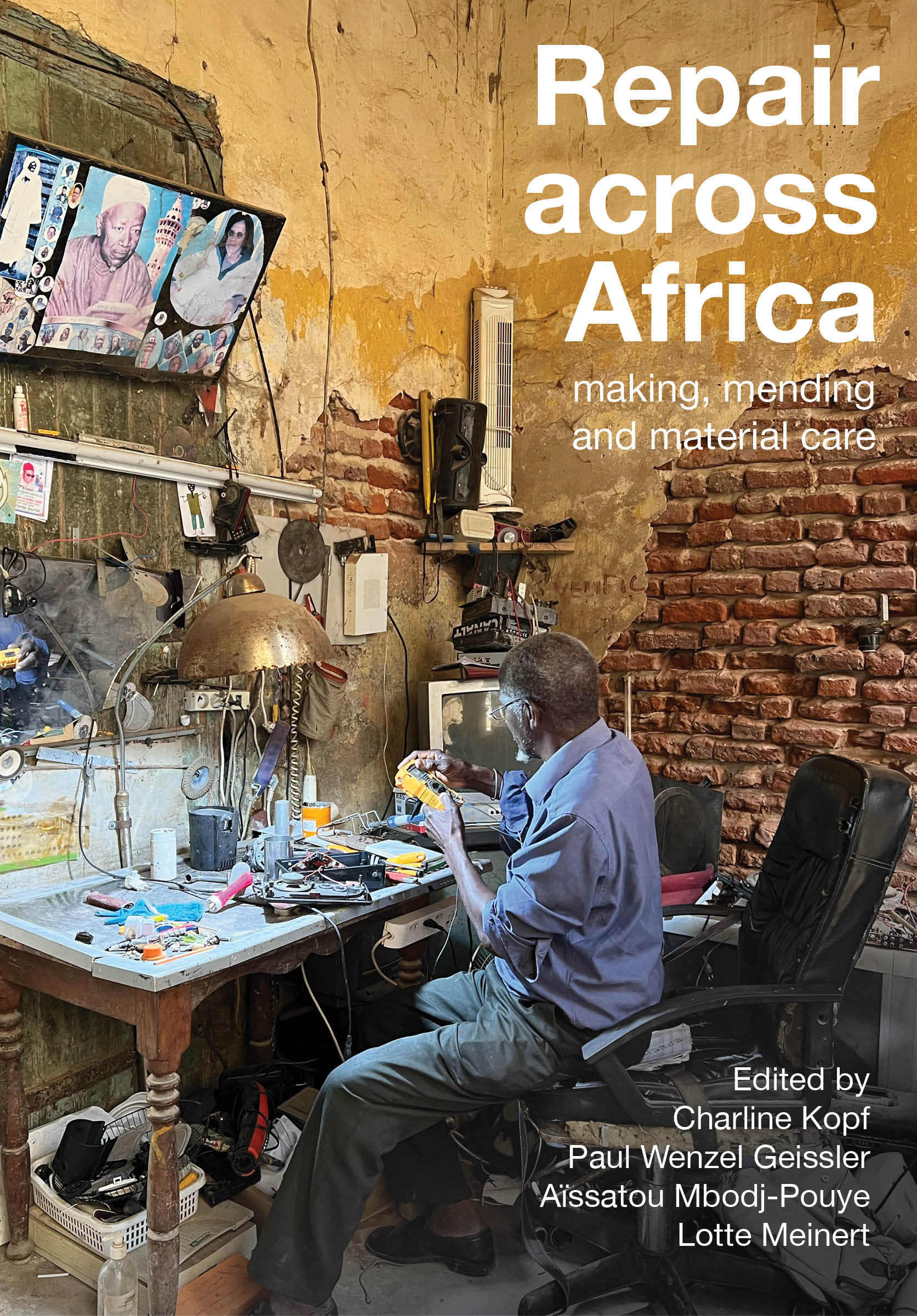
Included in the volume Repair across Africa. Mending, Making and Material Care, this chapter examines, on the basis of anthropological and ethnomusicological research, the practices of repairing, maintaining, and tuning timbila across different historical periods. Drawing on the experiences of timbila musicians, it explores how the scarcity of materials sourced from the local ecosystem, migration, and political and environmental changes have led to the experimentation with new materials and technical solutions in instrument making and performance practices. In response to the scarcity of certain materials, caused, among other factors, by deforestation and migration experiences in South Africa, musicians and instrument makers have turned to alternative materials and developed technical solutions to adapt and modify their instruments. These practices allow us to understand repair not merely as a response to material constraints, but, above all, as an integral part of the history and evolution of timbila in Mozambique and beyond. The chapter also addresses the tensions between these practices of transformation and institutional discourses that tend to represent timbila as a stable, unchanging, and authentic cultural expression. In this regard, the authors critically examine the effects of heritage-making processes and the different understandings of repair, authenticity, and preservation advocated by the various social actors involved.
Sara Morais e Gianira Ferrara (2026). Timbila: Tracing Mozambican History Through a Musical Artefact, Its Repair and Reinvention. In Charline Kopf, Paul Wenzel Geissler, Aïssatou Mbodj-Pouye e Lotte Meinert (eds.), Repair across Africa: Mending, Making and Material Care. Intellect Ltd, pp. 120–135.