


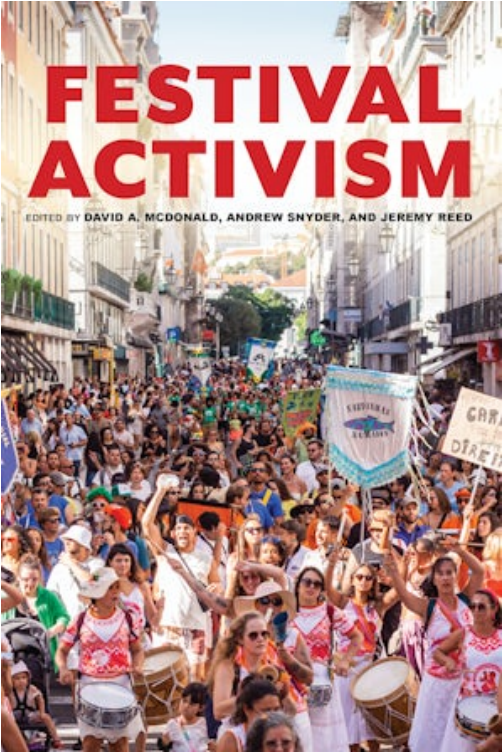
Andrew Snyder, researcher at INET-md, contributed to the book Festival Activism (2025) with the chapter “An Accessible Carnival: Festivity, Inclusion and Disability in Rio de Janeiro”.
Abstract:
Central to the ethics of many of Rio de Janeiro’s blocos, or street carnival music ensembles, has been a commitment to being participatory, free, democratic, and inclusive. Diverse movements have arisen focusing on gender equity, racial justice, integration of different classes, and political critique. But a notable absence has been focus on inclusion of people with disabilities. One of the major blocos of street carnival, Orquestra Voadora, has sought since 2018 to make the group’s activities accessible to disabled people, aiming to provoke a larger discussion about accessibility in the broader street carnival. Participants are encouraged to reflect on how musical practices are naturalized by ableism that structures society at large. Recognizing that “disability” is a word that encompasses many diverse realities, the band has sought to adopt general strategies to make their events more accessible and also respond to individual needs, shifting from strategies of accommodation to a goal of forging a culture of accessibility. They reject a separatist model of disability arts in favor of an integrationist one that is not only inclusive at the margins but that demands structural changes for all involved in ways, they argue, that will also create a more inclusive, empowering, and caring culture for all participants to thrive.