


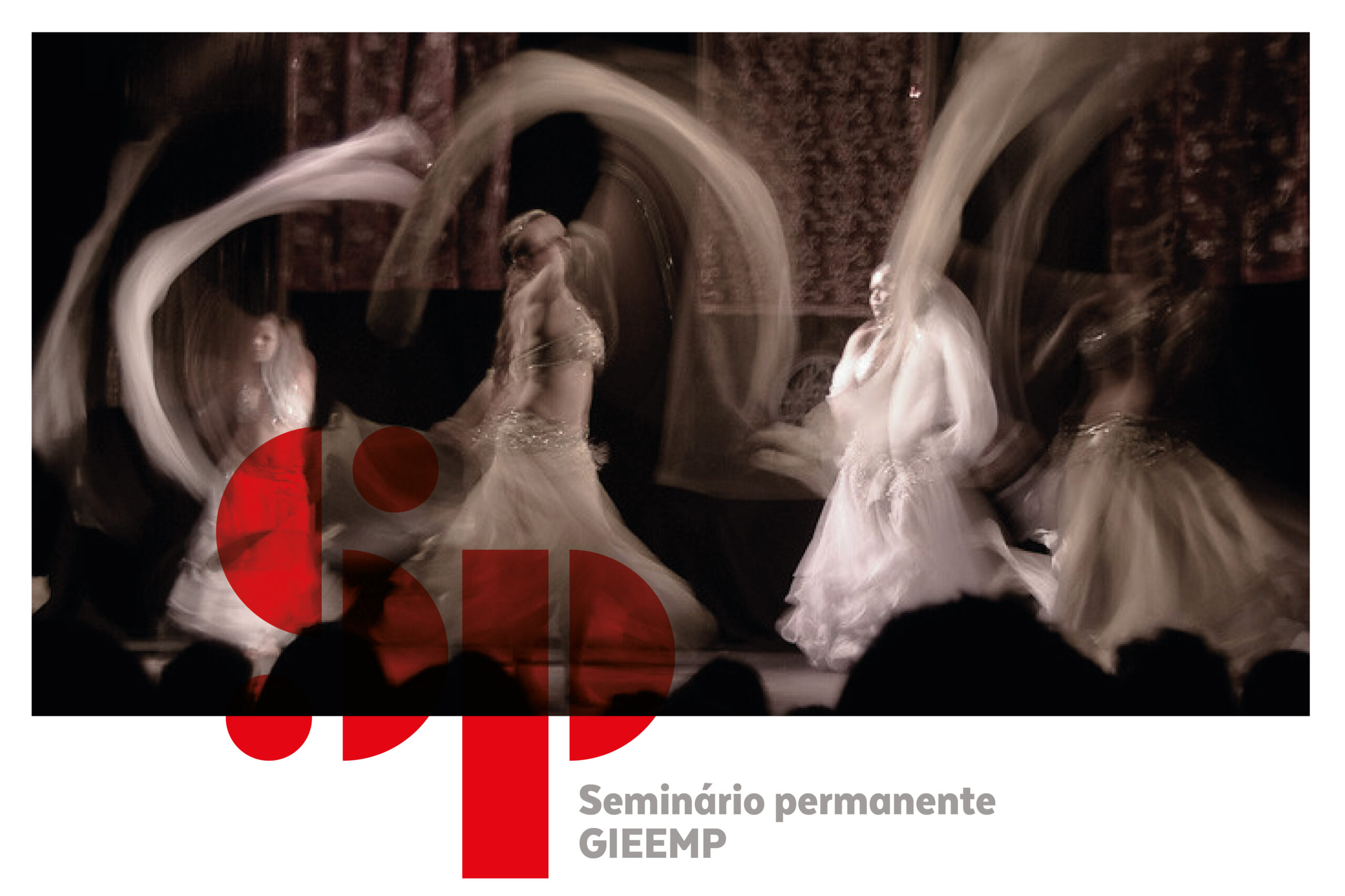
PERMANENT SEMINAR OF THE RESEARCH GROUP ON ETHNOMUSICOLOGY AND STUDIES IN POPULAR MUSIC
The Permanent Seminar in Ethnomusicology and Popular Music Studies, created in 2022, is the central event of the Research Group with the same name. It brings together all its researchers—integrated, collaborating or pursing a PhD—on a monthly or bi-monthly basis. Recent research presented by scholars from within and outside the group, both national and international, is discussed, always maintaining a balance of gender and career levels. The program is curated by Filippo Bonini Baraldi, Andrew Snyder, and Susana Sardo.
2026-09-22 | 6 pm | NOVA FCSH, Lisbon | Campus Campolide, Colégio Almada Negreiros | SE1, floor 0 & Online
Free entrance, in presence and online.
The intangible as a disputed territory: science, technology, and traditional knowledge in music and dance
Luis Naveda | Corpuslab/UEMG
In the clash between traditional music and dance practices, scientific methods, and heritage policies, the representation of intangible heritage is often trapped in inefficient models and open epistemological disputes. The result: dossiers on music and dance that omit forms of music making and movement; experiments that chase recurring patterns in environments where improvisation and variability are fundamental; and a scientific discourse that grows detached from popular cultures, from the body, from the contemporary. This lecture navigates these contested territories by experimenting with alternative and creative relationships between science, technology, and intangible heritage. How can we recover music and dance practices through still images? How can we observe the ways of doing of those who produce intangible cultural goods? And what transformations of traditional culture will survive the dematerialization of the interfaces between people, sound, and movement?
Luis Naveda | Researcher in digital humanities applied to the arts, focusing on the relationships between music, dance, and technology. He holds a PhD and postdoctorate in Art Sciences (Musicology) from Ghent University, Belgium (2011). He leads the Corpuslab research group and is a faculty member of the Graduate Program in Arts at UEMG.
His research connects computational analysis of movement in choreographic practices, and musical iconography — developing digital methods to recover embodied context from historical images of music and dance, with an emphasis on Afro-Brazilian and African diaspora cultures. He has published in journals such as Music Perception, Journal of New Music Research, and ARJ. He has delivered keynotes at ICMPC/ESCOM and at SACCoM conferences.
He collaborates internationally with Ghent University, KU Leuven, the Norwegian University of Science and Technology (NTNU), and the Universidad Nacional de La Plata, on projects addressing movement analysis, embodied music cognition, and intangible heritage. He is a recipient of the SACCoM/SEMPRE Young Research Award and the SBCM Best Paper Award, and has held national research grants in Brazil.
This event was financed by national funds through FCT — Fundação para a Ciência e a Tecnologia, I.P., with the project INET-md – Institute of Ethnomusicology – Centre for Studies in Music and Dance, reference UID/00472/2025, DOI: 10.54499/UID/00472/2025