


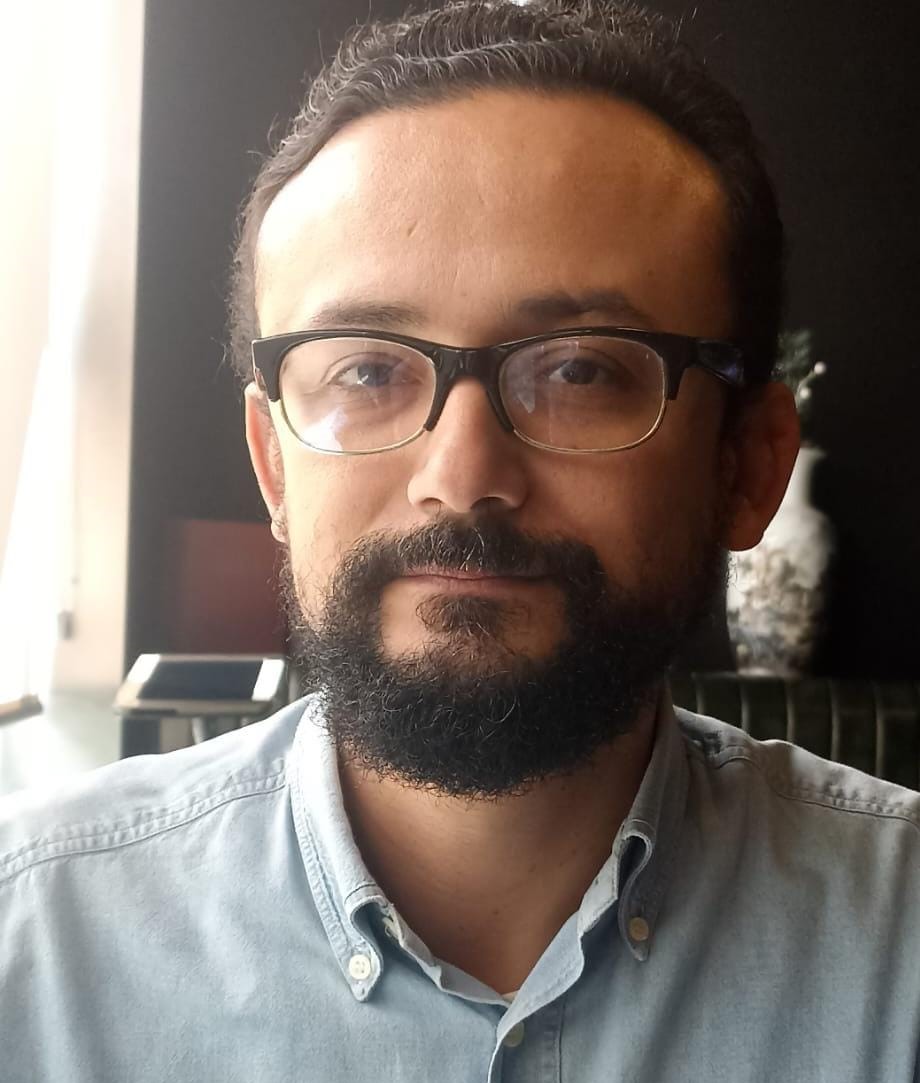
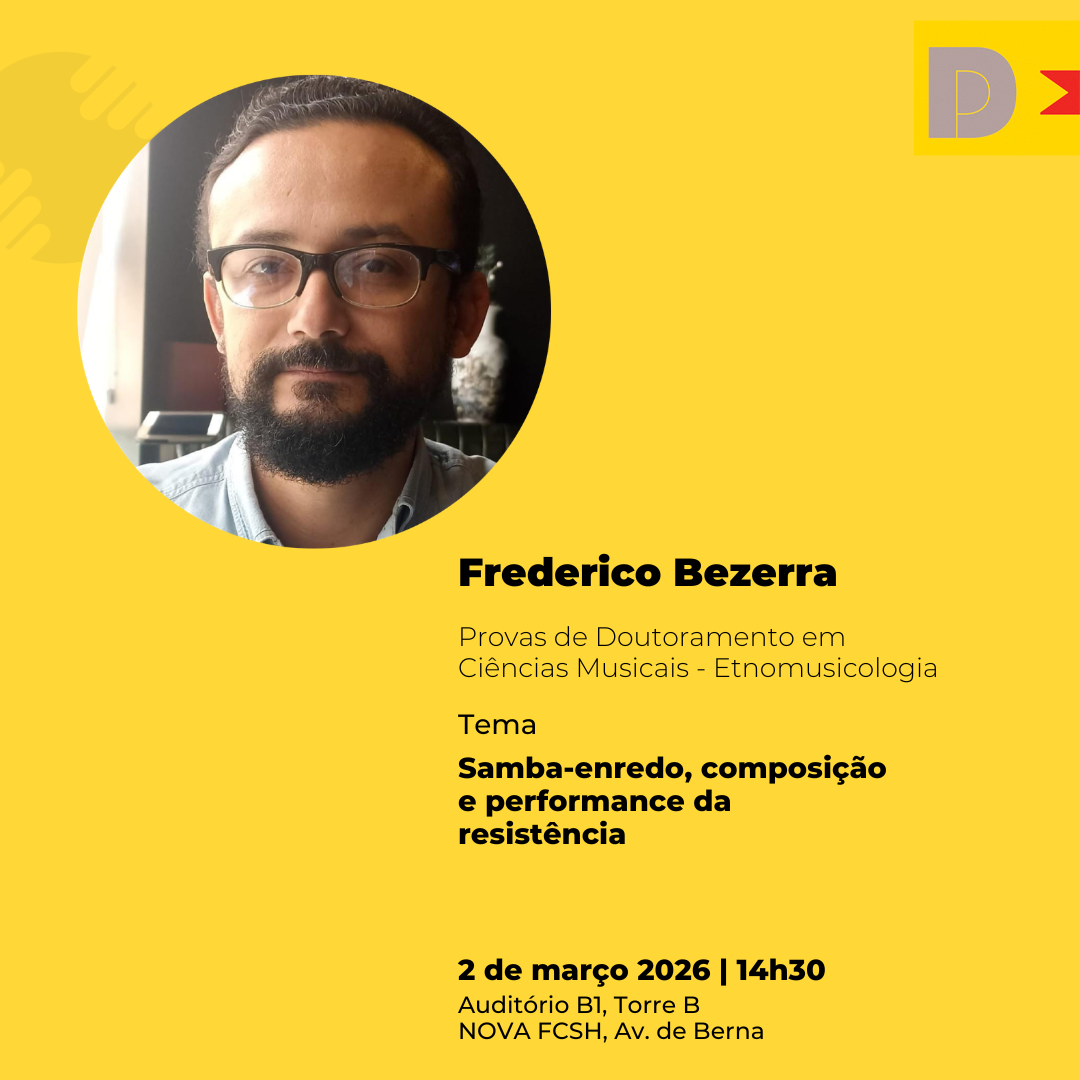
On March 2, 2026, by 2.30 pm, will be held the doctoral examinations in Musicology – Specialization in Ethnomusicology of Master Frederico Freire de Lima Neibert Bezerra who will defend his dissertation titled Samba-enredo, composition and performance of resistance, supervised by Rui Cidra.
Ph.D Committee:
- Prof. Dr Clara Rowland, President of the Committee (IELT, NOVA FCSH)
- Prof. Dr Rui Cidra, supervisor (IHC, NOVA-FCSH)
- Prof. Dr Vágner Gonçalves da Silva (Universidade de São Paulo, FFLCH-USP)
- Prof. Dr Filippo Bonini Baraldi (INET-md, NOVA FCSH)
- Prof. Dr Nuno Domingos (ICS-ULisboa)
- Prof. Dr Maria José Fazenda (ESD-IPL)
Samba-enredo, composition and performance of resistance
Samba-enredo is a musical genre performed for almost a century in Rio de Janeiro, Brazil. It is one of the components of the multi-artistic spectacle called the “samba school parade”. This dissertation seeks to demonstrate how music can structure and be structured by its social and cultural context. It proposes an ethnography of compositional practice centred on the collective process of production of a competing samba-enredo for the 2020 carnival of the Rio de Janeiro samba school Unidos de Vila Isabel. Through an ethnography of the rehearsals and events leading up to the school’s 2022 parade, it aims to understand how the members of the school dialogue with the genre. Based on the works of Bourdieu (1972) and Wacquant (2002) the study proposes an ethnomusicological analysis of the compositional habitus embodied by samba enredo’s practitioners. The research hypothesis is to investigate whether this compositional habitus is part of a set of narratives of black identity in Brazil, developed by black musicians and performers who find in the Samba School a home for their politics of resistance and identity. This way, the research is framed by the field of resistance theory, especially by the works of Michel De Certeau (1998 [1980]), Paul Gilroy (1993), James C. Scott (2013 [1990]) Johansson and Lalander (2012) and Vinthagen and Johansson (2013). At the same time, it considers the theoretical contributions of Muniz Sodré (2015), Simas and Rufino (2018), and Vagner da Silva (2019) to the field of the African diaspora studies in Brazil. As a result, the thesis presents three central contributions. Firstly, we show that the parade requires a physical and performative conditioning that has samba-enredo as one of its main supports. Schools perform not only aesthetic and artistic values, but also discipline and organization, fundamental values of a performance of mobilization. Secondly, we offer an overview of the political, economic, compositional and symbolic skills and aptitudes necessary for the constitution of what we call compositional habitus. We therefore understand that the parading body is the raw material that guides and organises compositional decisions, making samba and the body inseparable elements. Finally, we show how Afro-religious principles act as a popular philosophy that structures practices and knowledge within the samba school. The deity Exu projects a regime of values that directly contributes to the conception of subjectivities. Thus, being a samba musician with the power conferred by Exu provides support for a popular philosophy and a politics of resistance of Rio’s samba communities.
Key-words: Samba-enredo, Musical Analysis, Performance, Resistance, Ethnomusicology.